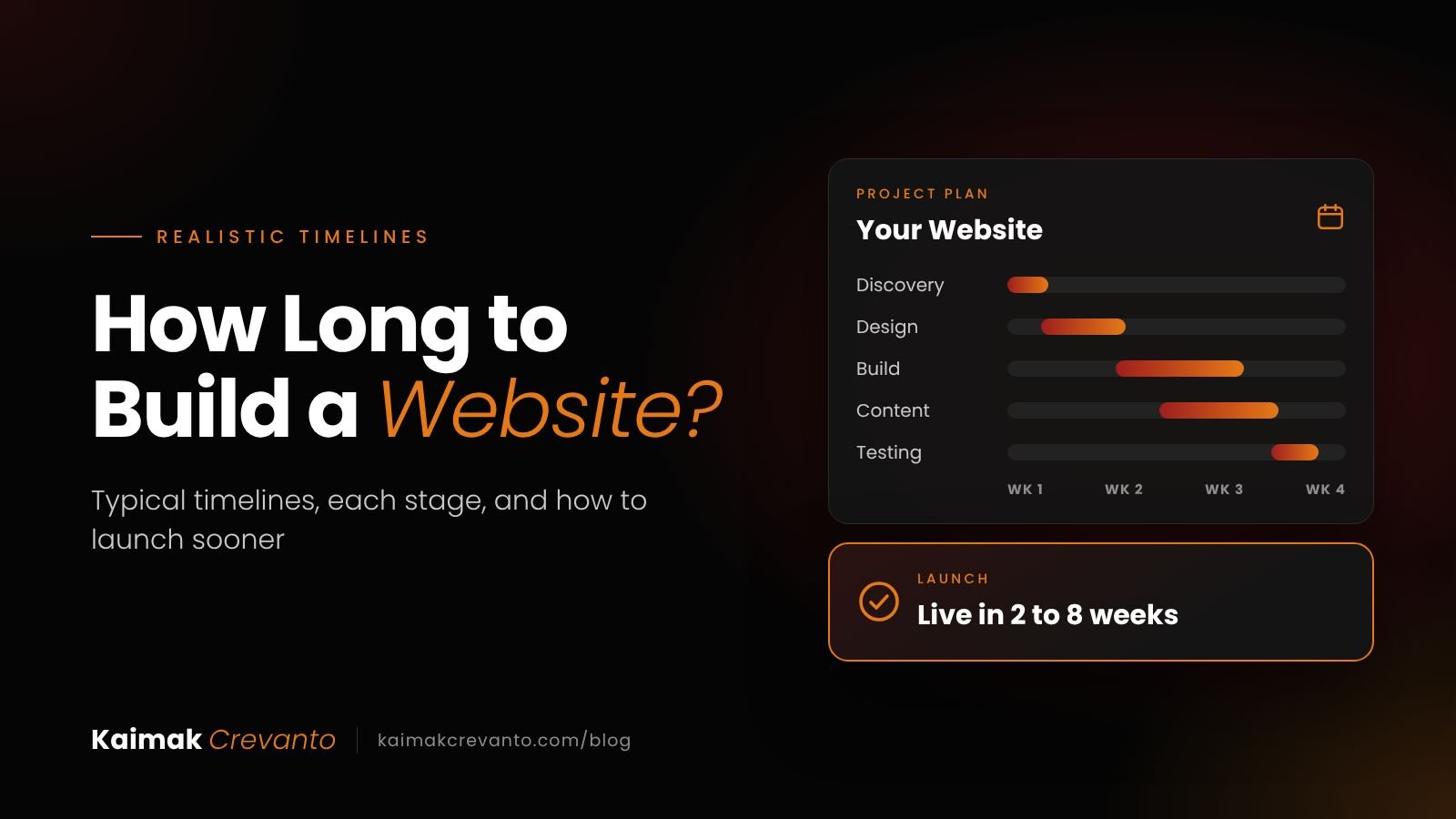
Short answer: A simple business website usually takes 2 to 4 weeks to build, a website with an admin panel your team can update takes 4 to 8 weeks, and an e-commerce site or custom web app can take 2 months or more. How long it takes to build a website depends less on the coding and more on how quickly the content, photos and feedback come in.
If you are planning a launch, a trade fair or a new product line, you need a realistic date, not a guess. This guide explains typical timelines for each type of website, what happens in each stage, what usually causes delays, and what you can prepare in advance to go live sooner.
1. How long to build a website: typical timelines
These are typical ranges for a well-run project. Your project may be faster or slower depending on its size and how quickly decisions are made.
| Type of website | What it usually includes | Typical timeline |
|---|---|---|
| Simple business website | 5 to 8 pages: home, about, services, contact | 2 to 4 weeks |
| Business website with admin panel | Pages your team can edit, product or service sections, blog, enquiry forms | 4 to 8 weeks |
| Product catalogue or e-commerce website | Many products, categories, filters, cart or enquiry basket, payments | 6 to 12 weeks |
| Custom web application | Customer or dealer portal, CRM, order system, dashboards | 2 to 6 months |
A manufacturer with 200 products will need more time than a consultant with five services, even if both sites look similar. The number of pages, products and features is what drives the timeline.
2. The stages of a website project
Almost every website goes through the same stages. Knowing them helps you see where time actually goes.
- Discovery (2 to 5 days). The developer learns about your business, customers and goals, and agrees on the pages and features. This is where scope is fixed.
- Design (1 to 2 weeks). The look of the home page and key inner pages is designed and shared for your approval.
- Development (1 to 4 weeks for most websites). The approved design is built into a working website, with forms, admin panel and any special features.
- Content entry (a few days to several weeks). Text, photos, product details and documents are added.
- Testing (2 to 5 days). The site is checked on phones, tablets and computers, forms are tested, and speed and SEO basics are reviewed.
- Launch (1 day). The site is connected to your domain and goes live.
For custom web applications, the development stage is much longer because every screen and workflow is built for your business. We cover when that makes sense in 7 Signs Your Business Needs a Web App.
3. Content is usually the biggest delay
In most projects, the design and coding run on time. What holds things up is waiting for content: the About Us text, product descriptions, team photos, certificates, client logos and price lists.
This is very common with busy owners. You are running a factory, a clinic or a sales team, and writing website text keeps slipping down the list. Two weeks of development can turn into two months of waiting.
A few ways to avoid this:
- Decide early who in your team owns the content.
- Start collecting photos and product details before the project begins.
- Ask your developer whether they can write or polish the text for you.
- Launch with your main pages first and add the rest later through the admin panel.
4. Other things that slow a project down
Apart from content, these are the most common causes of delay:
- Slow feedback. If each design review takes a week, a project with three review rounds loses three weeks.
- Too many decision makers. When partners or family members each want changes at different times, the design keeps going back and forth.
- Changing the plan halfway. Adding a new section, a second language or online payments after development has started means redoing work.
- Missing access. Domain logins, hosting details or the old website's email settings that nobody can find.
- Waiting for third parties. Payment gateway approval, a WhatsApp Business number or a logo still being designed by someone else.
None of these are unusual. They just need to be planned for.
5. How to get your website live sooner
You can save weeks with a little preparation:
- Agree on the scope in writing. A clear list of pages and features avoids surprises later.
- Give feedback within two or three days. Collect everyone's comments and send them together, in one message.
- Choose one person to approve. One final decision maker keeps the project moving.
- Share examples you like. Two or three websites you admire tell the designer more than a long description.
- Plan a phase two. Keep "nice to have" features for after launch instead of holding up the whole site.
6. Does a faster website mean a worse one?
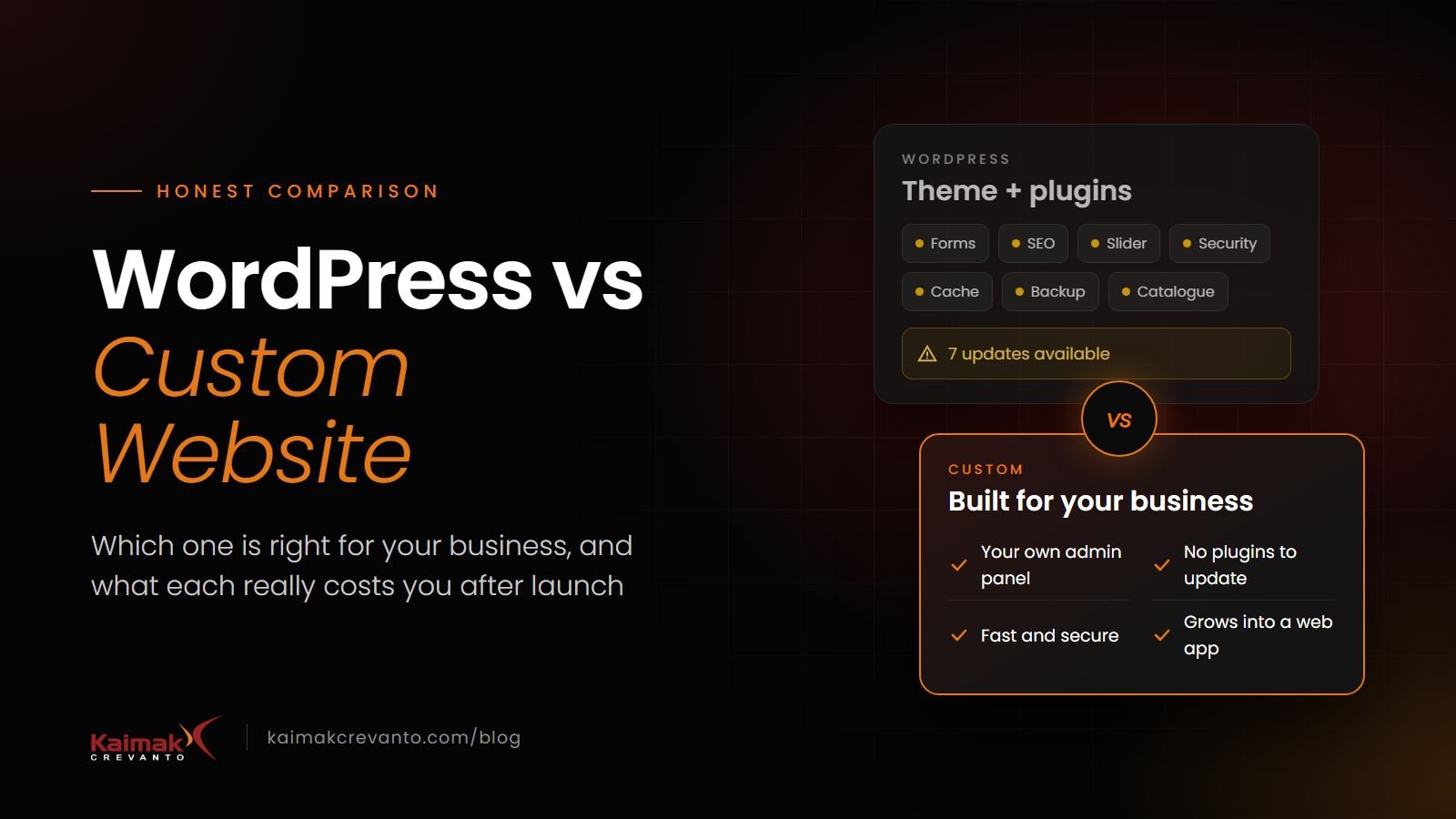
Not always. A website built on a ready-made theme can go live in days, and for a very small business that may be enough. The trade-off is that you get a design many other sites also use, and it can be harder to add features later.
A custom-built website takes longer because it is designed around your business, your products and the way your team works. It is usually faster to load and easier to grow. We compare both approaches honestly in WordPress vs Custom Website: Which Is Right for Your Business?
The right choice depends on what the website needs to do for you, not just how quickly it can be finished. If budget is part of the decision, see our guide to website cost in India.
7. Launch is not the finish line
Going live is an important day, but a few things take time after launch:
- Google needs time to find your pages. A new website can take a few days to a few weeks to start appearing in search results.
- Your Google Business Profile should link to the new site. This helps local customers find you on Google Maps. Our Google Business Profile setup guide walks you through it.
- Small fixes come up. Expect a couple of weeks of minor changes once real customers start using the site.
8. Checklist: what to prepare before your project starts
Having these ready on day one can cut weeks off your timeline:
- Your logo in good quality (ideally the original design file)
- A list of the pages you want
- Text for your About, Services or Products pages, even in rough form
- Photos of your premises, team, products or work
- Certificates, brochures or catalogues you want to show
- Domain and hosting login details, if you already have them
- Two or three websites you like, and what you like about them
- The name of the person who will give final approval
9. Common mistakes to avoid
- Fixing a launch date before the content is ready. Set the date after you know when content will arrive.
- Asking for "just one more small change" every week. Group changes together so the developer can finish each stage.
- Leaving testing to the last day. Check the site on your own phone during development, not after launch.
- Choosing the quickest quote without asking about the process. Ask how the project will run, how many review rounds are included and who will add the content.
10. Plan your website with a clear timeline
A good developer should give you a realistic timeline at the start, explain each stage and tell you what they need from you, and when. That way you know exactly when your website will go live.
At Kaimak Crevanto we have been building websites and web applications since 2018, with 190+ projects delivered for businesses in Rajkot, across India and abroad. Every project follows a clear, staged plan that you can see on our process page.
If you have a launch date in mind, get in touch with us and we will tell you honestly whether it is realistic and what it would take to get there.